RMA Prepares SPCC Plans for Facilities Across New Jersey, Region by Region
If you manage a New Jersey facility that stores oil, sooner or later someone asks to see your oil spill plan. It might be an insurer, a landlord, a customer's vendor questionnaire, or an inspector. That plan is usually called an SPCC plan, short for Spill Prevention, Control, and Countermeasure, and the first questions most people ask are who can write one and whether that person will come to the site.
The short answer is that we prepare SPCC plans for facilities across New Jersey, from the northern counties to the Delaware River and the Shore. This article explains how that works with site visits and remote coordination, what it means that we're a New Jersey firm, how the federal and state rules fit together, how facilities differ from one part of the state to another, and what a plan costs. If you'd rather talk it through, you can reach out to RMA at any point.
Table of Contents
TL;DR
Yes, we write SPCC plans for facilities anywhere in New Jersey. We're a New Jersey firm, and we work through a mix of on-site visits and remote coordination with photos, videos, and calls, depending on how complex your site is. Simple sites often go remotely. Larger or more complicated sites usually get a visit. If your oil storage is small enough, you may not need us at all, and we'll say so.
Does RMA Prepare SPCC Plans for Facilities Across New Jersey?
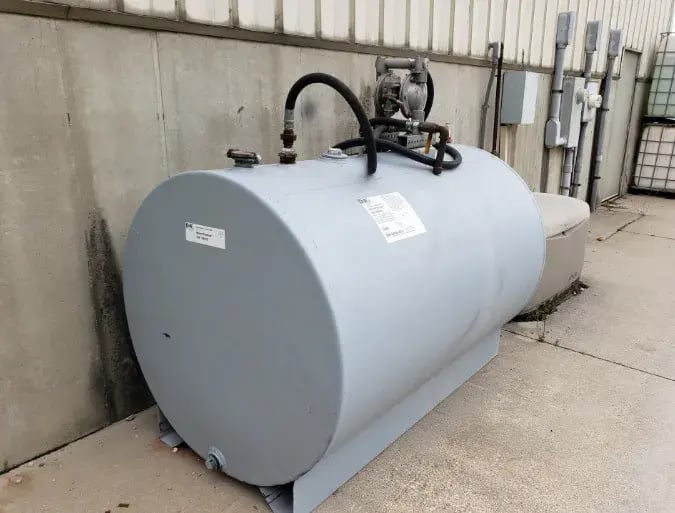
We do. We prepare SPCC plans for facilities in every part of the state, and the sites we see range from a single generator at an office building to multi-tank fuel yards. The common thread is oil. If your facility stores more than 1,320 gallons of oil aboveground in containers of 55 gallons or more, the federal SPCC rule probably applies to you. The number counts what the containers can hold, not what's in them today, and it includes oil-filled equipment and vegetable oils. Propane doesn't count.
The industries behind those facilities vary a lot. We've written about how the rule plays out for trucking and fleet yards, data centers, hospitals, schools and universities, farms, and food plants. If you're not sure whether your site crosses the threshold, our guide on how to determine whether your facility needs an SPCC plan walks through the counting step by step.
How Does an SPCC Plan Get Written With Site Visits and Remote Coordination?
We use both approaches, and which one fits depends on the facility. For simpler sites, such as a few tanks, a generator, and a straightforward layout, we can develop the plan remotely. You send photos and videos of your tanks, piping, and drainage, you fill out our forms about oil storage, containment, and site layout, and sometimes we schedule a video call where you walk us through the key areas. We draft the plan from that material, ask follow-up questions as they come up, and deliver a binder for the site along with an online copy. Our guide on how remote SPCC development works covers the steps in more detail, and this one helps you judge whether your site qualifies.
For larger or more complicated facilities, we recommend a site visit. Facilities with several bulk tanks, a fuel unloading area, complicated drainage, or a history of spills benefit from someone standing in the yard and looking at how oil moves around the property. Photos can't always show you where a dike drains or how a truck pulls up to unload. A visit costs more than a remote job, but a plan that misses something on the ground doesn't help you in an inspection.
Some plans also need a Professional Engineer to review and approve them. That depends on the size and setup of the facility, and our article on Tier I, Tier II, and PE-certified plans explains where the lines fall. When a plan needs that review, we plan for it from the start so it doesn't hold up delivery.
On your side, the work is lighter than most people expect. We need an oil container inventory, any existing plan and inspection records, a site drawing or aerial image, your fuel delivery details, and one person who can answer questions day to day. We've put together a list of what we need from you to start, and a shorter checklist of what to have ready before the first call. You don't need everything up front, and we help fill gaps.
What Does Being Based in New Jersey Mean for Your SPCC Plan?
We're a family-run firm based in New Jersey, and we've been doing environmental compliance work since 1992. That means we deal with NJDEP and the state's oil and discharge programs all the time, not as a side topic. When a facility asks whether a New Jersey rule changes what the plan should say, we're usually answering from experience with the same rule on another site last month.
We'd rather be straight about what that does and doesn't mean. Being based in New Jersey doesn't mean we have an office down the street from every facility in the state. It means we know the state's programs, we're reachable by people who know your region, and we can get to your site when a visit makes sense. For many facilities the remote process works fine whether you're in Sussex County or Cape May County, and we'll tell you honestly which approach we think fits yours.
We'll also tell you when you don't need us. A small facility with a modest amount of oil can often write its own plan using EPA's template, and we've published guides on completing EPA's template and when self-certification is allowed for exactly that reason. If you can do it yourself safely, you should.
Which Oil Spill Rules Apply to New Jersey Facilities?
Three layers of rules overlap, and most facility managers only know about the first one if they know about any. The first is the federal SPCC rule, which is enforced in New Jersey by EPA Region 2. It's written to prevent oil from reaching waterways, and it requires a written plan, secondary containment, inspections, employee training, and a review of the plan every five years. Our article on who enforces SPCC plans explains how EPA approaches inspections.
The second layer is New Jersey's Spill Compensation and Control Act, usually called the Spill Act. It covers discharges of oil and many other hazardous substances, requires that discharges be reported to NJDEP, and can make the party responsible for a discharge liable for cleanup costs. Liability under the Spill Act can be broad, and an environmental attorney is the right person to ask how it applies to a particular situation. The third layer applies to "major facilities" under N.J.A.C. 7:1E, which can need a Discharge Prevention, Containment and Countermeasure (DPCC) plan and a Discharge Cleanup and Removal (DCR) plan. Whether your site counts as a major facility depends on how much it stores and what it stores, so you'll want to check the rule against your own inventory. We've covered how the state and federal plans relate in this comparison of SPCC and DPCC plans.
New Jersey also regulates underground tanks under N.J.A.C. 7:14B, and local fire officials enforce the Uniform Fire Code on tank installations and storage. Those programs sit alongside the SPCC plan rather than replacing it. A good plan accounts for them, and a good consultant tells you when something falls outside what the plan covers.
How Do New Jersey SPCC Plans Differ by Region?
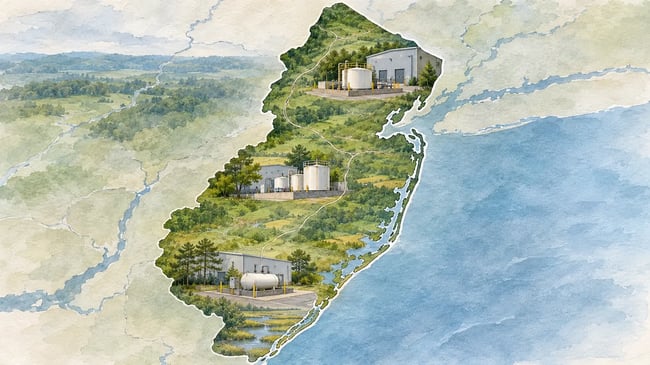
The federal rule is the same everywhere in the state, but the facilities and the conditions around them aren't. The groupings below are ours, drawn for convenience, and county lines don't map to them neatly. Treat the table as a picture of what we tend to see rather than a rule about any given site.
| Region |
Facilities we commonly see |
What tends to shape the plan |
| Northern New Jersey (Bergen, Passaic, Essex, Hudson, Union, Morris, Sussex, Warren) |
Warehouses and distribution centers, manufacturers, data centers, hospitals, fleet yards |
Tight sites, generators in or near buildings, heavy truck traffic, nearby waterways and storm drains, and in some areas the Highlands and Meadowlands |
| Central New Jersey (Middlesex, Somerset, Mercer, Hunterdon, inland Monmouth) |
Office campuses, schools and universities, manufacturers, warehouses, data centers |
Backup generators, heating oil tanks, and equipment added over the years that nobody recounted |
| Delaware River and South Jersey (Burlington, Camden, Gloucester, Salem, Cumberland) |
Food plants, farms, fleets, manufacturers, port and marine operations |
Vegetable oils and animal fats, farm fuel tanks, and in port areas the possibility of overlapping federal oversight for marine transfers |
| Shore and Pinelands (Ocean, Atlantic, Cape May, coastal Monmouth) |
Marinas, municipal and school yards, hotels and resorts, farms |
Flood-prone ground that affects containment and drainage, seasonal operations, and local land-use rules in the Pinelands |
One thing holds across all four regions. Distance from water rarely gets a New Jersey facility out of the rule, because the test is whether a discharge could reasonably be expected to reach navigable waters, and storm drains, ditches, and small streams count as pathways. Our article on the reasonable expectation of discharge explains the test in plain terms. Regional land-use bodies in places like the Pinelands, Highlands, and Meadowlands can add their own requirements to development and construction, so if your site sits in one of those areas, confirm the details with the regional agency.
Operators with several sites in different parts of the state have a different challenge, which is keeping the plans consistent and the reviews on schedule. We cover that in managing SPCC plans across multiple New Jersey facilities.
What Does an SPCC Plan Cost for a New Jersey Facility?
Our SPCC plans generally run from $2,500 to $15,000. That's a wide range because facilities are so different. A site with one generator and a couple of drums sits near the low end, and a site with multiple bulk tanks, a loading area, and complicated drainage sits near the high end. The main things that move the price are total oil storage capacity, the number and type of containers, whether a Professional Engineer needs to review and approve the plan, whether secondary containment has to be evaluated, and whether a site visit is part of the job.
We're not the cheapest option, and we don't want to be. A plan that's thin or built from a generic template can cost you far more in an inspection than you saved up front, and our guide on red flags in an SPCC plan proposal shows what to watch for when you compare quotes. For a deeper breakdown of how we price plans, see SPCC plan costs explained. You can also run your own facility's details through our pricing calculator below to see where you land.
When Should a New Jersey Facility Start Its SPCC Plan?
The best time is before you add oil, not after. The plan has to be in place before a facility starts operating with enough oil storage to trigger the rule, and it needs an amendment when you add tanks, change containment, or install a generator. If you're expanding, our article on how new oil storage changes your SPCC plan explains what to do and when.
Building or expanding a facility brings its own set of approvals, and we want to be clear about where we fit. Construction-phase requirements, such as construction stormwater coverage, soil erosion and sediment control certification, and building or fire permits for a new tank installation, are handled by your engineer, contractor, or a soil erosion specialist. We don't prepare those. What we do is the operational side that begins once the facility is running: the SPCC plan or amendment, spill reporting procedures, inspections, training, and where it applies, state discharge prevention planning. We can also help you figure out which construction-phase professionals to talk to.
Once a plan is in place, it needs ongoing attention. Your team has to inspect, keep records, and take annual oil-handling training, and the plan needs a review every five years. Our online training library covers the training piece for employees who handle oil.
How Can RMA Help With Your New Jersey SPCC Plan?
If you want help, we'll start with a conversation about your site: how much oil you store, what kind of equipment you have, where it sits, and what's prompting the request. From there we'll tell you whether a remote process fits, whether a site visit makes sense, and whether you may be able to handle it yourself. There's no obligation, and the senior people you talk to at the start are the people who do the work.
You can call us at 888-RMA-0230, email us, or fill out the form on our website. Whichever you pick, contact RMA and tell us where your facility is and what you're storing. If you'd like to read more first, our guide to everything you need to know about SPCC plans is a good place to start.