How to Spot a Weak SPCC Plan Proposal for Your Pennsylvania Facility Before You Sign It
You've asked for quotes on an SPCC Plan, the federal oil spill prevention plan required for facilities with more than 1,320 gallons of aboveground oil storage, and now you've got three proposals on your desk. One is $900, one is $3,200, and one is $8,000. They all promise a "compliant plan," and none of them reads like it's describing the same job. Most facility managers in Pennsylvania have never bought one of these before, so there's no easy way to tell which proposal describes real work and which one describes a document.
The short answer is that a good proposal tells you what will happen at your site, who will do it, and what you'll have in hand when it's finished. A weak one gives you a price and a turnaround time. This article walks through six red flags we see in SPCC proposals, why each one is a problem under 40 CFR Part 112, and what a solid proposal says instead. If you'd like someone to look at a proposal with you, you can reach out to RMA and we'll tell you straight whether it holds up, even if you never hire us.
Table of Contents
TL;DR
Six things separate a weak SPCC Plan proposal from a solid one: a real site visit, a price built around your actual facility, verified oil storage capacity and documented containment calculations, PE certification that involves someone who examines the site, a plan for integrity testing, and clear terms for amendments and updates. A proposal that's silent on any of them is probably leaving that work out, and the gap tends to show up during an EPA inspection or after a spill. Ask every firm the same questions and compare the answers, not just the totals.
What Should a Good SPCC Plan Proposal Include?
A proposal for an SPCC Plan is a description of work, and the work is what gets tested when EPA shows up. EPA Region 3 enforces the federal oil spill rule in Pennsylvania, and an inspector doesn't grade a plan on how polished it looks. The inspector walks your site with the plan in hand and checks whether the two match: whether the tanks on the page are the tanks in the yard, whether the containment is as big as the plan says, and whether the inspections the plan promises are happening and written down. A plan that fails that walk-through is a bad plan no matter what it cost. If you want to know how a visit goes, we've covered what happens during an EPA SPCC inspection in Pennsylvania.
That's the standard to hold a proposal to. Before you compare prices, check whether each proposal covers six things: how the site gets examined, how the price was built, how your oil storage capacity gets counted and your containment gets calculated, who certifies the plan and what that certification involves, what inspection and testing the plan sets up, and what happens when your facility changes. Every red flag below is a gap in one of those. A proposal that skips one isn't a bargain. It's leaving out the part of the job you'd otherwise find out about during an inspection or a spill, and the penalty side of that is laid out in how EPA Region 3 calculates SPCC penalties for Pennsylvania facilities.
Red Flag 1: No Site Visit in the SPCC Plan Proposal
The federal rule ties a plan to the facility it describes. When a professional engineer certifies a plan under 40 CFR 112.3(d), the engineer attests that they, or an agent, visited and examined the facility. When a smaller facility self-certifies a Tier I plan using EPA's template, the owner or operator signs statements that include a site visit as well. Either way, the rule assumes someone has looked at your tanks. A proposal that never mentions a visit is proposing to build the plan from a phone call and an equipment list, and that's where plans go wrong. The tank that was moved last spring isn't on the list. The dike drain valve that's been left open isn't on the list. The generator the landlord added isn't on the list.
Some firms develop plans remotely, with someone at your facility walking the site on video and sending photos. That can work for simpler facilities, and we've written about whether your facility is a good fit for remote SPCC plan development, so a remote process isn't the red flag. The red flag is a proposal that doesn't say how the site will be examined or who will examine it.
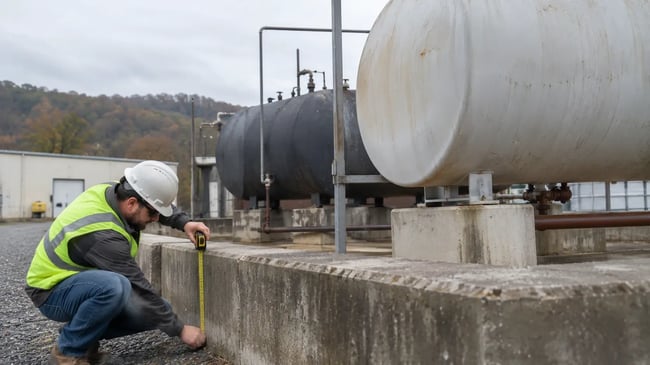
A good proposal names who comes to your site and what they'll look at: every container, the piping, the loading and unloading areas, the containment, and the drainage paths toward storm drains and water. It says what they'll measure and photograph, roughly how long they'll be on site, and what you should have ready, like your tank inventory and any existing plan, permits, or inspection records.
Red Flag 2: A Price That Assumes a Generic SPCC Template
Price should follow the facility. The number of containers, how they're laid out, whether you've got oil-filled equipment, drums, totes, and loading areas, and how close you are to water all change how much work a plan takes. When a firm quotes a flat price before asking a single question about your site, it's usually pricing a fill-in-the-blank template, and the questions it skipped are the ones it'll skip again when it writes the plan.
Templates themselves aren't the problem. EPA publishes a Tier I template, and for a qualified facility it's a legitimate way to get a compliant plan, as we explain in can my Pennsylvania facility use EPA's Tier I SPCC template. But a facility loses Tier I status when any single container is over 5,000 gallons or its aggregate aboveground storage is over 10,000 gallons. A flat-price proposal that never asked about your capacity is guessing which kind of plan you need, and if it guesses wrong you've paid for a plan type you can't use. Tier I, Tier II, or PE-certified explains how the three types differ.
A good proposal asks about your site before it quotes. Then it states the assumptions behind the number: how many containers, which plan type, whether PE certification is included, and what would change the price if the facts turn out different once someone sees the site.
Red Flag 3: No Capacity Verification or Containment Calculations
Two calculations hold up an SPCC Plan, and a proposal should say who does them. The first is the count. The federal threshold is more than 1,320 gallons of aboveground oil storage, counting only containers of 55 gallons or more, or more than 42,000 gallons buried. It's capacity that counts, not what's in the tank today, and oil-filled equipment counts too. A proposal that takes your estimate of "about 2,000 gallons" at face value, without anyone adding up the actual capacities, can put you in the wrong plan type or tell you that you need a plan when you don't. Our posts on the 1,320-gallon rule and how to inventory oil tanks, drums, and equipment cover how the count works.
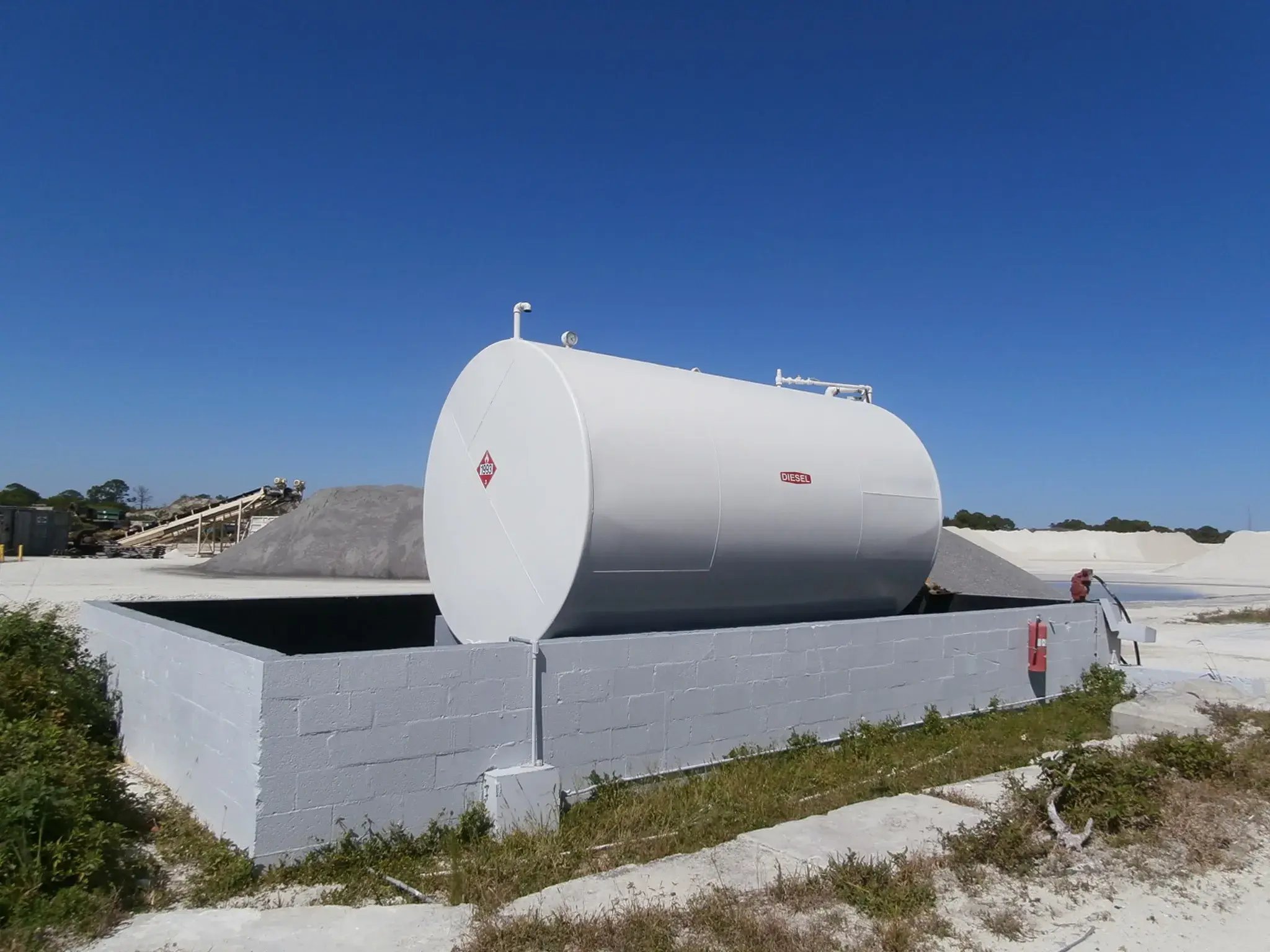
The second is secondary containment. Under 40 CFR 112.8(c)(2), containment around bulk storage has to hold the entire capacity of the largest single container, plus enough freeboard to hold rainfall. The rule doesn't hand you one rainfall number, so a plan has to say what it assumed. Plenty of cheap plans skip the math and state that containment is "adequate." That sentence is quick to write and hard to defend. Real containment evaluation means measuring the dike, calculating its volume, subtracting the space taken up by tank bases and anything else inside it, and checking the drains and valves. How to evaluate secondary containment walks through it step by step.
A good proposal says that containment will be evaluated with measurements and calculations that go into the plan, and that any shortfall will be reported to you in writing with options for fixing it. A shortfall your consultant finds is a project you can budget for. A shortfall an inspector finds is a violation.
Red Flag 4: PE Certification From Someone Who Never Sees the Site
Some plans need a professional engineer's certification: facilities that don't qualify to self-certify, facilities that choose the PE route, and any plan that relies on certain measures like an environmental equivalence or a finding that secondary containment is impracticable. Under 40 CFR 112.3(d), the engineer attests to several things, including that they're familiar with the rule, that they or their agent visited and examined the facility, that the plan was prepared under good engineering practice, that inspection and testing procedures are established, and that the plan is adequate for the facility. The certification doesn't relieve you of the duty to carry out the plan, either.
Notice the words "or an agent." The rule doesn't require the engineer to personally walk your site, so a PE-certified plan built by a firm's staff and then reviewed by an outside engineer isn't a problem. It's how we handle it when a plan needs a PE: our staff typically do the site work and develop the plan, and an outside professional engineer licensed in the state reviews, stamps, and seals it. The red flag is a proposal where no one qualified examines the site at all, and a seal goes on a plan built from a questionnaire. Another is a flat "PE certified" fee with a one-day turnaround, which suggests the review is a signature and not a review.
Ask who visits the site, who the engineer is and where they're licensed, what the engineer reviews before certifying, and how much time the review adds. Our posts on whether an SPCC plan needs a Pennsylvania-licensed engineer and what the PE does when certifying a plan go deeper, and why PE-certified SPCC plans cost more explains the price gap.
Red Flag 5: No Mention of SPCC Integrity Testing
An SPCC Plan isn't finished when the document is delivered. The rule at 40 CFR 112.8(c)(6) requires you to test or inspect each aboveground container for integrity on a regular schedule and whenever you make material repairs. The qualifications of the person doing it, the frequency, and the type of testing follow industry standards that fit the container's size, configuration, and design, and the records have to be kept. A proposal that says nothing about testing produces a plan that says tanks will be tested "per industry standards," with no standard named, no schedule, and nobody who knows what that means. Inspectors ask for the records, and an empty file is a finding.
Which standard applies depends on the tank. Shop-built tanks typically fall under STI SP001, large field-erected tanks under API 653, and some Pennsylvania tanks bring DEP's certified inspector requirements into the picture. Whether a given requirement applies to your tank depends on its size, type, and use. We cover the options in integrity testing for bulk oil containers, STI SP001 tank inspections, and Pennsylvania's DEP-certified tank inspectors.
A good proposal names the standard that fits each of your tanks, sets an inspection and testing schedule in the plan, and says which checks your own trained staff can do and which need a qualified inspector. It also spells out whether the testing itself is part of the price or billed separately. Your monthly walk-around inspections belong in that conversation too, and our monthly SPCC inspection checklist is a good starting point.
Red Flag 6: Vague Terms on SPCC Plan Amendments and Updates
A facility changes, and the plan has to follow. Under 40 CFR 112.5(a), a change that materially affects the potential for a discharge, like adding, removing, or moving a container, changing piping, or altering containment, requires an amendment. The amendment has to be prepared within six months, then implemented as soon as possible and no later than six months after it's prepared. Separately, 112.5(b) requires a review of the plan at least every five years, documented with a signed statement saying whether the plan will be amended. Technical amendments need PE certification, except at qualified facilities that self-certify. The five-year SPCC review rule covers the review in detail.
The red flag is a proposal that's silent on all of that. Watch for plans billed as complete with no mention of the first five-year review, updates billed hourly "as needed" with no rate, and firms that won't give you an editable copy of your own plan. Ask what an amendment costs or how it's priced, how fast they turn one around, whether you get the editable file, and whether they'll update a plan they didn't write. On that last one, we'll tell you where we stand: we usually don't update another firm's plan and rebuild it from scratch instead, and we'd rather say that up front than have you find out after you've signed. Can I get my SPCC plan updated? Maybe! explains why.
How Much Should an SPCC Plan Cost in Pennsylvania?
Price alone isn't a red flag, but a price far below the rest almost always means one of the six gaps above. At RMA, a Tier I SPCC Plan runs about $1,500 to $4,000, and SPCC plans overall run about $1,500 to $15,000 depending on the facility. A $900 proposal sits under both numbers for a reason, and the reason is usually the visit, the calculations, or the review that got left out. A cheap plan that has to be redone costs you the first price, the second price, and whatever an inspector finds in between. The pricing calculator below gives you an estimate for RMA's help with your facility, so you've got a number to hold other proposals up against.
What moves a quote is mostly the amount of work involved, and the table below shows the main factors. How much a Tier I SPCC plan costs in Pennsylvania and SPCC plan costs explained go deeper on each one.
| Factor |
Pushes the price up |
Pushes the price down |
| Containers and locations |
Many containers, several storage areas, drums, totes, oil-filled equipment |
A few tanks in one area |
| Plan type |
Tier II or full plan, PE certification |
Tier I qualified facility using EPA's template |
| Containment |
Several dikes to measure, shortfalls to evaluate, impracticability analysis |
One dike with known dimensions |
| Existing records |
Missing diagrams, old plans, no inspection records |
Current inventory, diagrams, and inspection records on hand |
| Number of sites |
Several facilities, each needing its own visit |
One site |
How Do You Compare SPCC Plan Proposals Side by Side?
Put the proposals next to each other and check each one against the six flags. The table below shows what a weak answer tends to look like and what a solid one says in its place.
| Red flag |
A weak proposal |
A good proposal |
| Site visit |
Plan built from a phone call and a questionnaire |
Names who visits, what they examine, and what you provide |
| Price |
Flat number quoted before any questions |
Asks about your site first and states its assumptions |
| Capacity and containment |
Takes your estimate on faith and calls containment "adequate" |
Verifies capacities, measures dikes, documents the math, reports shortfalls in writing |
| PE certification |
A seal with no site examination and a one-day turnaround |
Names the engineer and licensing state, explains the review and the added time |
| Integrity testing |
Silent, or "per industry standards" |
Names the standard for each tank, sets a schedule, says who performs it |
| Amendments |
No word on updates, the five-year review, or your editable file |
Spells out amendment pricing, turnaround, the five-year review, and your editable copy |
Ask every firm the same questions and compare the answers, not just the totals. A firm that does the work answers them easily, and a firm that doesn't tends to answer with a testimonial. And if you aren't sure you're over the threshold, check that first, because a facility under it doesn't need a proposal at all. How to determine whether your Pennsylvania facility needs an SPCC plan is the place to start.
How Can RMA Help You Review an SPCC Plan Proposal?
If you've got a proposal in hand, whether it's ours or another firm's, you're welcome to send it over and we'll tell you what it covers and what it leaves out. There's no charge and no obligation, and if the proposal is solid we'll say so. If you'd like us to do the work, we start with a site visit, build the plan around your actual containers and containment, and bring in an outside professional engineer when the plan needs one. Initial SPCC training comes free with a new plan from us, and more courses are available in our online training library. We're a family-run firm, and the people who scope your job are the people who do it. If you'd like to know what the process feels like first, what it's like to hire an SPCC plan consultant walks through it.
You can call us, email us, or fill out the form on our website, and there's no pressure to do any of it on a deadline. When you're ready, contact RMA and we'll take a look at what you've got.