How Fleet Fueling, Backup Generators, and Fuel Deliveries at Carlisle, Shippensburg, and Chambersburg Facilities Bring Federal Oil Spill Rules, and Why the Chesapeake Bay Watershed Raises the Stakes
The I-81 corridor through the Cumberland Valley is built on trucks. Carlisle, Shippensburg, and Chambersburg are packed with distribution centers, trucking terminals, and fleet yards, and nearly every one of them stores fuel and oil somewhere on site. A diesel tank for the yard trucks, a generator for the cooler or the conveyor system, drums of motor oil in the shop, a tote of hydraulic fluid at the dock. Federal fuel tank rules, known as the SPCC rule (Spill Prevention, Control, and Countermeasure), require a written oil spill plan once a facility stores more than a set amount of oil, and a lot of operators in the valley don't realize they've crossed that line.
We'll walk through how fleet fueling and generators push a site over the threshold, what containment and fuel delivery procedures the rule expects, why the Chesapeake Bay watershed matters when a spill happens here, and what to do in the first minutes of one. If you'd like a second set of eyes on your own yard, you can reach out to RMA and we'll tell you straight whether you need a plan.
Table of Contents
TL;DR
If your Cumberland Valley fleet yard or distribution center holds more than 1,320 gallons of oil in containers of 55 gallons or more, counting fuel tanks, generator tanks, drums, totes, and oil-filled equipment, you need a written federal oil spill plan. The fuel in your trucks' own tanks doesn't count, but yard diesel tanks, fuel trailers, and generator fuel do. The plan covers containment, fuel delivery procedures, inspections, and training. The valley drains into the Susquehanna and Potomac rivers, both part of the Chesapeake Bay watershed, so a spill that reaches a storm drain or creek travels. For a visible sheen on water, call the National Response Center, and for any spill emergency, call Pennsylvania DEP.
Does a Fleet Yard or Distribution Center Need an Oil Spill Plan?
An SPCC Plan is a written plan for preventing oil spills and keeping them out of waterways. A facility needs one when its total aboveground oil storage capacity is more than 1,320 gallons, counting only containers of 55 gallons or more, or when its buried storage capacity is more than 42,000 gallons. It's capacity that counts, not what's in the tank today, so an empty 2,000-gallon tank still counts and a tank you've permanently closed doesn't. The rule defines oil broadly. It covers petroleum products like diesel, gasoline, motor oil, and hydraulic oil, and it also covers used oil and vegetable oils, so a food distributor with a fryer oil tank is in the count too. Propane and DEF aren't oil.
Most operators underestimate how fast it adds up. One 2,000-gallon diesel tank clears the threshold by itself. If a yard tank holds 1,000 gallons, a generator tank, a few drums of oil in the shop, and a couple of hydraulic reservoirs can push the total over. The rule also applies where there's a reasonable expectation that oil could reach a creek, a wetland, or a storm drain that leads to one, and a yard near I-81 with catch basins is hard to argue out of that. Our posts on whether you store enough oil to need a federal spill plan, how drums add up in a shop, and what counts as oil walk through the counting in detail.
If you already have a plan, the same math decides whether it needs an update every time you add a tank or a generator. If you don't have one and you're over the line, you'll need one, and the EPA's Region 3 office is the agency that enforces the rule in Pennsylvania. Our article on what happens during an EPA SPCC inspection is worth reading before one shows up.
How Does Fleet Fueling Trigger SPCC Requirements?
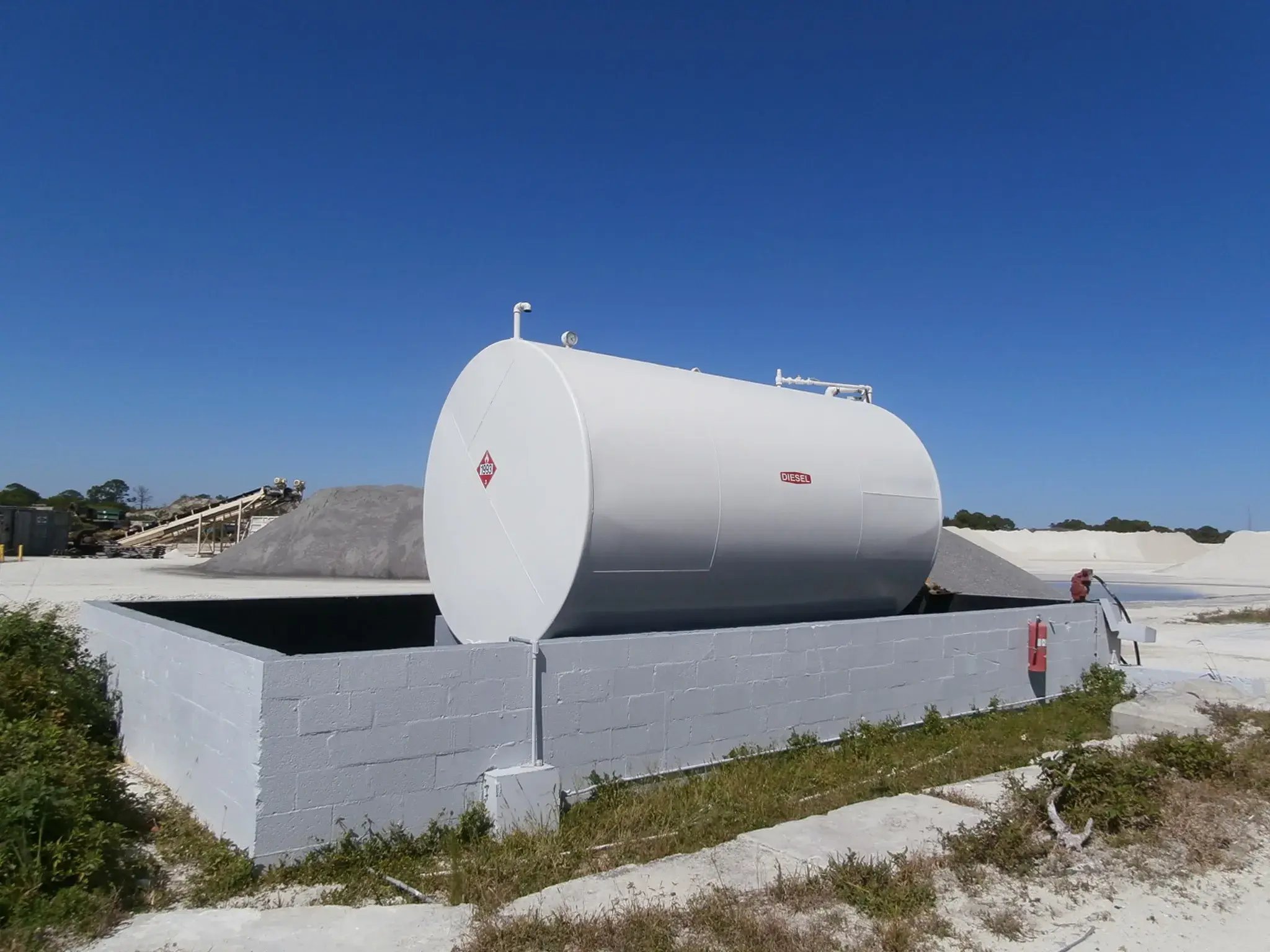
Fleet fueling is the most common reason a Cumberland Valley facility lands under the rule. The line the rule draws is between the fuel in a vehicle's own tank and fuel stored for later use. Fuel in the tank that powers a truck, a yard tractor, or a forklift is a motive power container and is exempt. Fuel in a stationary yard tank, a fuel trailer, a skid tank, or a tote on a pallet isn't exempt. Those count toward your total, even if you only use them on busy weeks.
| Fueling setup |
Counts toward the SPCC threshold? |
What to watch |
| Fuel tanks on trucks, yard tractors, and yard equipment (used to power the vehicle) |
No, motive power containers are exempt |
Containers that store fuel for transfer elsewhere don't qualify for the exemption |
| Aboveground diesel tank in the yard |
Yes, full capacity |
Sized secondary containment, overfill prevention, integrity testing |
| Fuel trailer or skid tank |
Yes |
Containment where it's parked and where it transfers fuel |
| Mobile refueler truck |
Yes, bulk storage |
Exempt from sized containment, but general containment still applies |
| Totes and drums of oil, hydraulic fluid, used oil |
Yes, if 55 gallons or more each |
Containment sized for the largest container |
| Completely buried tanks under federal UST rules |
Generally excluded from SPCC |
Subject to separate underground tank rules |
Mobile refuelers deserve a note, since many fleets run one. EPA exempts a refueler from the sized secondary containment that other tanks need, because fixed containment under a vehicle that moves all day creates its own safety problems. The exemption doesn't remove the duty to contain the most likely spill, though. Your plan still has to address the fill point, the hose, and the transfer area, and a refueler that's parked and used as a stationary tank loses the exemption. We cover the portable side in our article on totes, barrels, and portable tanks. If you have buried tanks, see when buried tanks count toward SPCC, and whether an aboveground tank needs DEP registration depends on its size, type, and use, so check yours against the guidance in our article on Pennsylvania aboveground tank registration.
How Do Backup Generators at Distribution Centers Affect SPCC?
Large distribution centers lean on backup power, and the generator's fuel tank is usually the piece that decides the question. A generator set is two things in one. The fuel tank is bulk storage, and the engine's lubricating oil is oil-filled equipment, which counts when the reservoir is 55 gallons or more. A generator that runs twice a year still counts at full tank capacity. Where the tank is a double-walled tank built into the base of the generator, the outer shell can serve as secondary containment, but a separate day tank fed from a larger tank elsewhere on site gets counted and evaluated on its own. Our article on double-walled tanks and secondary containment explains where that shell does and doesn't satisfy the rule.
A new generator is where many facilities get caught. A site that sat under the threshold last year adds a 1,000-gallon generator tank and is suddenly over it. We walk through what changes in adding a backup generator and your SPCC status and whether a warehouse needs an oil spill plan for a generator. Generators can also bring air permitting and Tier II reporting for the diesel, covered in emergency backup generators and environmental permits.
If you're building or expanding, the construction side is a separate track. Installing a tank or generator pad can involve building and fire permits, construction stormwater and erosion controls, and in Pennsylvania possibly a DEP-certified installer for some tanks. RMA doesn't handle those, and your engineer or contractor will. What we do pick up is the operational side once the equipment is running: the SPCC Plan or its amendment, DEP tank registration questions, inspections, training, and often Tier II. We can also help you figure out what the construction phase needs and point you to the right people.
What SPCC Containment and Fuel Delivery Procedures Do Fleets Need?
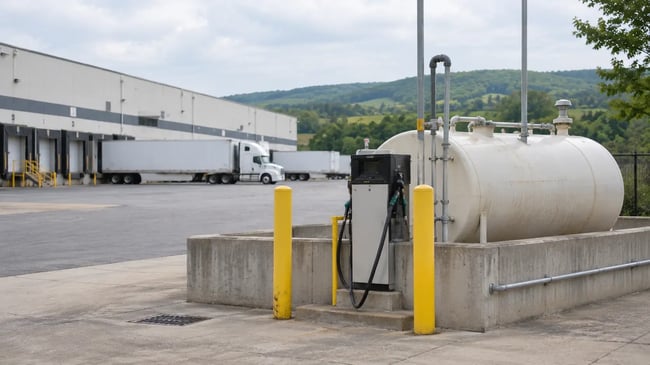
The rule asks for sized secondary containment under bulk storage tanks, meaning a dike, a double-walled tank, or another system that holds the entire capacity of the largest tank plus room for rain. Smaller or occasional spill points, like the fueling island, the drum rack in the shop, and the hose connections, fall under general containment, which has to catch the most likely spill from that spot. Overfill prevention matters at every tank, and overfill alarms, gauges, and procedures are where most fleet spills could have been stopped.
Fuel deliveries are the spill risk fleets overlook, since a supplier's driver is on your property filling your tank while nobody from your team is watching. A good plan spells out the routine. Someone from your site confirms how much room the tank has before the truck arrives. The driver and your staff both know where the fill port is and that the transfer is attended the whole time. Drain valves on dikes stay closed and locked, and the fill area has a spill kit within reach. If your site loads or unloads tank trucks at a rack, the rule goes further: containment sized for the largest compartment of the biggest truck, warning lights or barriers with wheel chocks or brake interlocks so trucks can't pull away connected, and a check of the truck's lowest drains and outlets before it leaves. If your supplier owns the tank, who's responsible for a spill isn't always obvious, which we cover in who's responsible when your fuel supplier owns the tank.
The rule also expects the human side to be in place. Your plan has to describe how you control access to fuel areas and secure valves and pump controls, and oil-handling staff get training in the plan, spill procedures, and the pollution laws that apply. You hold a discharge prevention briefing at least once a year for the people who work around the tanks. Fleets with drivers who fuel themselves and shop staff who top off tanks should include both groups. Our annual discharge prevention briefing agenda gives you a ready-to-use outline, and the online training library covers the training side.
Why Does the Chesapeake Bay Watershed Matter for Oil Spills in the Cumberland Valley?
The valley sits on a divide. Conodoguinet Creek, which drains the northern two thirds of Cumberland County and the upper third of Franklin County, flows to the Susquehanna River near Harrisburg. Conococheague Creek, running through Chambersburg, flows south into the Potomac River. Both river systems are part of the Chesapeake Bay watershed, and Pennsylvania counts both creeks among its Bay watershed streams. A spill at a Carlisle, Shippensburg, or Chambersburg facility that reaches a storm drain, a ditch, or a stream is on its way to one of them.
There's no separate Bay oil rule that applies to you, and the Bay clean-up work in the valley centers on nutrients and sediment. What the watershed does change is how seriously regulators and neighbors take a release, and how far downstream one can travel. It also supports the federal test behind the SPCC rule. A plan is required where there's a reasonable expectation that oil could reach waters of the United States, and "we're not near water" rarely holds up when your yard drains to a catch basin that outfalls to a creek. We explain how that test works in storm drains, creeks, and your oil tanks and why "we're not near water" rarely works.
For a fleet or distribution site, the practical steps are to know where your storm drains lead, keep the yard's inlets protected near fueling and loading areas, and keep spill kits where drivers and shop staff can reach them in seconds. Many truck terminals and distribution sites also have industrial stormwater permitting to think about alongside the oil spill plan, which is a separate program we can help you sort out.
Who Do You Call When Oil Spills at a Pennsylvania Fleet Facility?
Safety comes first. If there's fire, a vapor hazard, or anyone hurt, call 911 before anything else. If it's safe, stop the source, close valves, shut off the pump, and keep the oil off the pavement that drains to the storm system with absorbents, drain covers, or berms.
Then make the calls. Federal law requires you to report a discharge that creates a visible sheen on a waterway or shoreline, and the trigger is the sheen, not the amount of oil. The report goes to the National Response Center at 1-800-424-8802, which is staffed around the clock. For environmental emergencies in Pennsylvania, DEP runs a 24-hour hotline at 1-800-541-2050, and it's the number to call when a spill leaves your site or you're not sure whether it's reportable. When you're not sure, call. Our article on the sheen rule goes through which spills trigger a report.
A significant spill or any letter from an agency afterward can turn into an enforcement matter, and an environmental attorney may be appropriate at that point. We can help with the plan and the operational compliance side, but we're not a law firm.
What Does an SPCC Plan Cost for a Fleet or Distribution Center?
SPCC plans from RMA run from about $1,500 to $15,000 overall, and a simple Tier I plan runs about $1,500 to $4,000. Fleet and distribution sites often have more going on than a simple Tier I site, and what moves the price is shown below.
| Factor |
Effect on price |
| Total aboveground storage over 10,000 gallons |
Up, because a Professional Engineer has to certify the plan |
| Number of containers, tanks, drums, and totes |
Up with each one added to the inventory |
| Fueling area, generators, and truck unloading areas |
Up, as each needs its own containment and procedures |
| Secondary containment that needs evaluating |
Up, with more site measurement and analysis |
| Multiple buildings or locations |
Up, though consistent plans across sites help |
Plans that need PE certification cost more and take longer, because the engineer's review is a paid step. We explain why in why PE-certified SPCC plans cost more, and for the simple end of the range, see what a Tier I plan costs. You can run your own numbers with RMA's SPCC pricing calculator below. Be wary of a quote far under everyone else's, since a plan that doesn't hold up in an inspection costs more to fix than it saved.
How Does RMA Help Fleets and Distribution Centers With SPCC Plans?
We're a family-run environmental consulting firm, and we work with fleet, distribution, and industrial facilities across Pennsylvania. We start by working out whether you're over the threshold at all, since some sites aren't and we'll say so. If you are, our staff do the site visit, inventory your tanks, drums, and generators, evaluate your containment, and develop the plan. When it needs PE certification, we work with a licensed Professional Engineer who reviews, stamps, and seals it. We don't have an engineer on staff. Initial SPCC training is free with a new RMA plan.
If you're staring at a yard full of tanks and aren't sure where you stand, you can call us, email us, or fill out the form on our website. There's no pressure and no obligation. When you're ready, reach out to RMA and we'll start with what you store and where it drains.