Seven Signs It's Time to Bring in an SPCC Consultant, and What Kind of Help Fits Each One
Plenty of Pennsylvania facilities can manage their oil spill plan on their own for years without trouble. SPCC stands for Spill Prevention, Control, and Countermeasure, and an SPCC Plan is the written oil spill prevention plan that EPA's federal rule requires once a facility stores more than 1,320 gallons of oil aboveground (counting only containers of 55 gallons or more) or more than 42,000 gallons buried. Then something changes. A new tank goes in, a spill happens, a letter shows up from EPA, or the person who wrote the plan retires, and the binder on the shelf stops matching the site. Knowing which of those moments calls for outside help, and which ones you can handle yourself, saves money and keeps small gaps from turning into penalties.
This article walks through seven signs that a facility needs help with its SPCC Plan: crossing the threshold, losing qualified facility status, adding tanks or generators, missing the five-year review, having a spill, hearing from EPA, and having nobody on staff who understands the plan. For each one we explain what's happening and what kind of help fits, from a few hours of guidance to a full rebuild. If you aren't sure where your facility stands, you can reach out to RMA and we'll tell you whether you need us or not.
Table of Contents
TL;DR
A Pennsylvania facility needs outside help with its SPCC Plan when something about the site or the plan has changed in a way the plan doesn't reflect. The usual triggers are crossing the 1,320-gallon threshold, going over 10,000 gallons or having a big spill (which ends self-certification and requires a professional engineer), adding tanks or generators, missing the five-year review, a spill, an EPA letter, or losing the one person who understood the plan. Smaller facilities with a clean spill record can often handle an update themselves. If the plan is old, the site has changed, or EPA is involved, a consultant usually costs less than the problems that follow.
What Are the Signs a Pennsylvania Facility Needs Help With Its SPCC Plan?
An SPCC Plan isn't a one-time document. It describes the oil on your site, how it's contained, how you inspect it, and what happens if it spills, and it only works while that description matches reality. Every sign below is a version of the same problem: the facility moved and the plan didn't, or nobody can say whether it did. The table sums up each sign, what's usually going on, and the kind of help that fits. The sections after it explain the details.
| Sign |
What's usually going on |
Help that fits |
| Crossed the threshold |
Total oil storage passed 1,320 gallons and there's no plan yet |
Self-written Tier I plan if you qualify, otherwise a consultant-built plan |
| Lost qualified facility status |
Storage over 10,000 gallons, a container over 5,000 gallons, or a bad spill history |
A professional engineer (PE) certified plan |
| Adding tanks or generators |
A change that affects spill risk, so the plan needs an amendment |
Amendment, ideally before the new equipment goes in |
| Overdue five-year review |
The plan hasn't been reviewed and signed off in over five years |
A documented review, or a rebuild if the plan no longer fits |
| Spill |
Reporting, cleanup, and a plan that may need to change |
Spill response first, plan review second |
| EPA contacted you |
An inspection notice or information request about your oil storage |
Plan and records review, and possibly an environmental attorney |
| Nobody understands the plan |
The author left, and inspections and training have slipped |
Plan review, training, and an inspection routine |
Your Pennsylvania Facility Just Crossed the SPCC Threshold
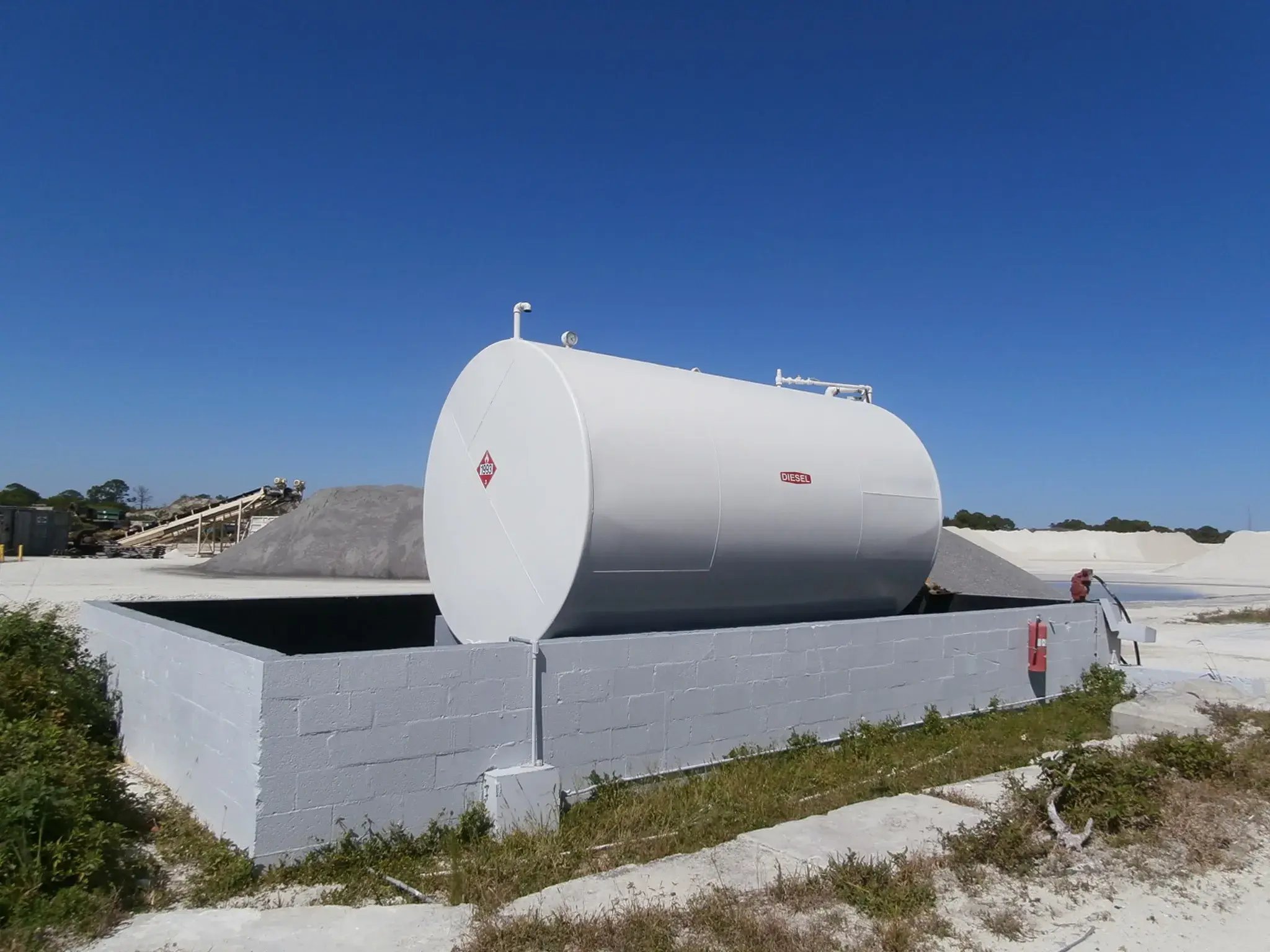
The threshold sneaks up on people because it counts capacity, not contents. A tank that's half empty still counts at its full size, and so do drums, totes, oil-filled transformers, hydraulic equipment, and tanks of used oil, cooking oil, or other animal fats and vegetable oils. Propane and diesel exhaust fluid don't count. A shop with one 500-gallon diesel tank, a few drums of hydraulic oil, and a transformer can be over 1,320 gallons without anyone having added up the total. Our guides on how to determine whether your facility needs an SPCC Plan and how to inventory your oil containers show how to do the math yourself.
Once you're over, you need a plan, and it's supposed to be in place before the extra oil goes in, so the best time to get help is before the tank arrives rather than after the fuel truck does. What kind of help depends on your size. If your total aboveground storage is 10,000 gallons or less, no single container is over 5,000 gallons, and you haven't had a serious spill recently, you may qualify to write and self-certify a simple Tier I plan using EPA's template, with no engineer involved. We cover that decision in this self-certification guide, and we'll tell you if that's the right path for you. A consultant earns their fee when the inventory is messy, when you can't tell whether your containment is adequate, or when you'd rather not carry the risk of a template filled out wrong.
Your Facility Lost Qualified Facility Status and Needs a PE-Certified SPCC Plan
A qualified facility is a smaller site that EPA lets certify its own plan without a professional engineer. To stay qualified, your aggregate aboveground oil storage has to be 10,000 gallons or less, and over the past three years you can't have had a single discharge over 1,000 gallons or two separate discharges over 42 gallons each within any twelve-month period. Tier I, the simplest version, also limits any single aboveground container to 5,000 gallons. Cross any of those lines and you're no longer qualified. The rule then requires a full plan certified by a licensed professional engineer, and it gives you six months to get it in place. Our post on what happens when you cross 10,000 gallons goes deeper, and this comparison of Tier I, Tier II, and PE-certified plans explains the differences.
This is the sign where outside help is hardest to avoid, because you can't certify the plan yourself. RMA doesn't have a professional engineer on staff. When a plan needs PE certification, we work with an outside PE licensed for the state. Our staff typically does the site visit and develops the plan, and the PE then reviews, stamps, and seals it. That review is a separate cost and adds time, which we explain in why PE-certified plans cost more. Before you commit, it's worth asking whether you can shrink back under the limits instead. Permanently closing a tank takes it out of your count, as we describe in our guide to permanently closing an oil tank. A past spill, though, doesn't age out until the three years are up.
Very large facilities face one more layer. A site that transfers oil over water and stores at least 42,000 gallons, or stores a million gallons or more with certain risk factors, needs a separate facility response plan, covered in our post on when oil storage goes beyond SPCC. That's rare, but it's the point where you should have an experienced consultant involved from the start.
You're Adding Tanks, Generators, or Other Oil Storage and Need an SPCC Plan Amendment
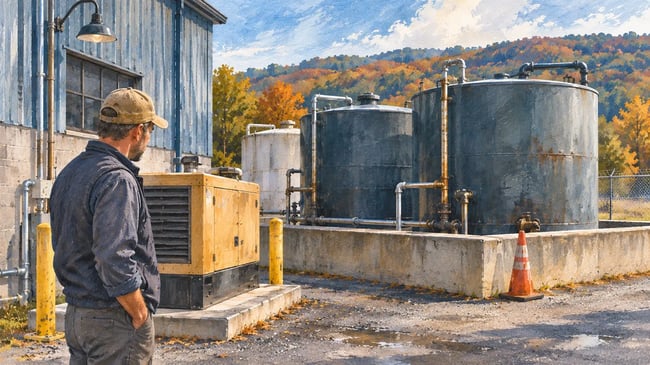
If you already have an SPCC Plan, the rule requires you to amend it when a change in design, construction, operation, or maintenance materially affects your chance of a discharge. Adding or replacing a tank, moving containers, rerouting piping, and changing your containment all qualify. The amendment has to be prepared within six months of the change and put into practice within six months after that. If you don't have a plan yet and the new equipment pushes you over 1,320 gallons, you're in the situation from the first sign, and you'll need to get a plan. A backup generator is the classic example, because the diesel in its base tank and any day tank adds to your total, and sometimes it's the tank that tips a facility over. We walk through it in our backup generator guide.
This is the one sign you can see coming. Bring in help while the equipment is still being specified, so the plan, the containment, and the tank location all agree before anything is installed. Pennsylvania also has its own tank program, so a new aboveground tank may need to be registered with DEP and installed by DEP-certified people, which our guide to aboveground tank registration covers. One boundary to be clear about: RMA doesn't handle construction-phase work, which includes installation, building and fire permits, and erosion and sediment control for a construction site. Your engineer or contractor handles those. Our part is the operational side, meaning the SPCC amendment, inspections, and training once the equipment is running, and we're glad to help you figure out which construction professionals you'll need.
Your SPCC Plan Is Overdue for Its Five-Year Review
SPCC Plans don't expire, but the rule requires a review at least once every five years. The review has to be documented, with a signed statement saying whether the plan will be amended. If the review turns up field-proven technology that would meaningfully reduce your spill risk, the plan has to be amended within six months. A missed review is one of the most common findings when a plan gets looked at closely, and it's usually the easiest sign to fix. We explain the rule in the five-year review guide, and what to do when your plan is over five years old covers the practical next steps.
Whether you need help depends on how far the plan has drifted. If the plan was solid, your tanks and containment are the same, and the only gap is the missing sign-off, a careful review you do yourself may be all it takes. If tanks have been added, removed, or moved, if the facility diagram is outdated, or if the plan came from a template nobody ever customized, a review won't fix it and you're looking at an update or a rebuild. A word of caution about updates: RMA usually doesn't update plans that other firms wrote. We typically rebuild from scratch so we know every part of the plan is accurate for your site. This article on getting a plan updated explains the tradeoffs.
Whatever you decide, don't backdate a review. If you're past five years, the right move is to do the review now and date it with today's date. A late review dated correctly is a smaller problem than a plan that looks like it was reviewed on time when it wasn't.
After an Oil Spill
If oil is moving right now, deal with that first. Stop the source if you can do it safely, keep people away, and call emergency services and make the required reports before you read anything else here. Once the immediate situation is under control, the questions pile up: who has to be told, what cleanup is needed, and what the spill means for your plan. Our posts on Pennsylvania oil spill reporting, spills that reach a creek, and soil contamination cleanup walk through each piece.
The plan side comes second. A spill is a natural moment to review whether your containment, inspections, and procedures worked, and a large enough spill can end your qualified facility status. Some spills also require a written follow-up to EPA Region 3, which we cover in this guide to EPA spill reports. A cleanup contractor handles the spill itself, and a consultant helps with the plan, the reports, and what changes afterward. If there's any question about liability or enforcement, an environmental attorney may be appropriate too.
When EPA Contacts You
EPA Region 3 enforces the SPCC rule in Pennsylvania. Contact usually comes as an inspection notice or an information request asking for your plan, inspection records, and training logs. Read the letter carefully, note the deadline, and don't ignore it. Our guides on responding to an EPA information request and what happens during an EPA SPCC inspection explain what to expect, and if penalties come up, how EPA Region 3 calculates SPCC penalties and expedited settlement agreements are worth reading.
A consultant can review your plan and records against the rule, tell you where the gaps are, and help you fix what can honestly be fixed. That's different from legal advice. Responding to an enforcement matter, negotiating a penalty, or deciding whether to disclose a problem are questions for an environmental attorney, and we'll say so when that's the case. One firm rule from our side: never rewrite, backdate, or fill in old inspection records to make them look complete. Document what you find now and what you're doing about it.
Nobody on Staff Understands the SPCC Plan
This sign is the quietest, and it's probably the most common. The person who wrote the plan changed jobs or retired, the plan sits in a binder, and monthly inspections, annual training, and tank testing slowly stop happening. Nothing is on fire, but the plan only protects you if you're following it, and a plan nobody follows can look worse than no plan during an inspection. We've written a recovery checklist in keeping an SPCC Plan alive after its author leaves that you can work through yourself in the first week.
Start by finding the plan and checking three things: whether it matches what's on site today, whether monthly inspection records exist, and whether anyone has been trained. If the plan matches and the gap is only training and inspections, you may not need a new plan at all. Staff can take a short course in our online environmental training library, and a consultant can walk the site with you and rebuild your inspection routine. If the plan doesn't match the site, was never customized, or can't be found, a rebuild is cleaner than patching it. Initial SPCC training is free with a new RMA plan.
What Types of SPCC Plan Help Exist, and What Do They Cost?
Help comes in a few forms, and the right one is usually the smallest that solves your problem. The table below lines up the options with what they cost. RMA's SPCC plans overall run from about $1,500 to $15,000, depending on facility size and complexity, with Tier I plans for smaller facilities at about $1,500 to $4,000. Two things push a price up: a facility with many containers, buildings, or drainage paths, and a plan that needs PE certification, which adds the engineer's review fee and extra time. Our guides on SPCC plan costs and Tier I plan costs in Pennsylvania break the numbers down further.
| Type of help |
Best fit |
Cost picture |
| Do it yourself with EPA's Tier I template |
Qualified facility, a few simple tanks, clean spill history |
Your staff's time, plus any containment or equipment fixes |
| Consultant-built Tier I plan |
Qualified facility that wants it done right and off its plate |
About $1,500 to $4,000 at RMA |
| PE-certified plan |
Over 10,000 gallons, a container over 5,000 gallons, or a spill history that ends qualification |
Toward the upper part of the $1,500 to $15,000 range, plus the engineer's review |
| Plan amendment or review |
New equipment, changes to the site, or a missed review |
Depends on how much changed, and a full rebuild is sometimes the better route |
| Training and inspection support |
Plan is sound but nobody is following it |
Online course library, or free initial training with a new RMA plan |
Costs beyond the plan itself are easy to forget, including tank registration, integrity testing, containment improvements, and spill kits. If you'd like a price specific to your facility, the SPCC plan pricing calculator below gives a quote for RMA's help with your plan, and the plan fee is only one piece of what a compliant facility spends.
How RMA Helps Pennsylvania Facilities With SPCC Plans
We're a family-run environmental consulting firm, and senior staff do the work on your plan. For SPCC, that means working out whether you need a plan, writing or rebuilding it, working with an outside professional engineer when certification is required, and helping you set up the inspections and training that keep it alive. We'll also tell you when you don't need us. If you qualify to self-certify and your situation is simple, we'd rather point you to EPA's template than sell you a plan.
If one of the signs above sounds like your facility, you can call us, email us, or fill out the form on our website, with no pressure and no obligation. You can also contact RMA directly to talk it through. To keep reading, our Pennsylvania SPCC articles and SPCC resource library cover most of the situations described here in more detail.