Oil Storage Rules for Office Parks, Hospitals, Manufacturers, and Data Centers in Philadelphia's Collar Counties
Suburban Philadelphia isn't where most people expect to find regulated oil storage. But the office parks, hospitals, factories, and data centers across Bucks, Montgomery, Chester, and Delaware counties are full of generators, hydraulic equipment, and fuel tanks, and many of them add up to more oil than the owner realized. That can bring federal oil spill rules, state tank rules, and local fire code into the same building.
This guide explains how the federal SPCC rule and Pennsylvania's tank program apply to facilities in the collar counties, what local fire officials do and don't cover, and the problems we see most often. If you'd rather talk through your own site, you can reach out to RMA at any point.
Table of Contents
TL;DR
If a facility in Bucks, Montgomery, Chester, or Delaware County stores more than 1,320 gallons of oil aboveground in containers of 55 gallons or more, it needs a federal oil spill plan, called an SPCC Plan. Backup generator tanks, oil-filled equipment, and drums all count. Pennsylvania's DEP storage tank program adds tank registration and inspection rules, and local fire officials separately handle fire code. None of the three approvals replaces the others, so check each one.
Do Facilities in Bucks, Montgomery, Chester, and Delaware Counties Need an Oil Spill Plan?
If your facility stores enough oil, yes, and the threshold is easy to cross. Federal law requires a written oil spill prevention plan, called a Spill Prevention, Control, and Countermeasure Plan or SPCC Plan, for facilities that store more than 1,320 gallons of oil aboveground, counting only containers of 55 gallons or more, or more than 42,000 gallons buried. The plan covers what you store, how it's contained, how it's inspected, and what your people do if something leaks. EPA Region 3 enforces the rule in Pennsylvania. Our plain-English overview, what an oil spill plan is, covers the basics if this is new to you.
Capacity is what counts, not what's in the tank today. A 4,000-gallon diesel tank that's half empty counts for 4,000. Oil-filled equipment counts, and so do vegetable oils and animal fats. Propane and diesel exhaust fluid don't. Add up every qualifying container across the whole facility, including the ones in the back of the property that nobody thinks about, and you may be over the line without ever having bought a "big" tank. Our posts on whether you need an SPCC Plan and how to inventory your tanks, drums, and equipment walk through the counting.
Pennsylvania adds its own layer on top. DEP's storage tank program regulates many aboveground tanks, and DEP's Southeast Regional Office in Norristown covers Bucks, Chester, Delaware, and Montgomery counties along with Philadelphia. So a facility in one of these four counties can answer to EPA on spill prevention, DEP on tank registration and inspection, and its own municipality on fire safety, and each one cares about different things.
Which Facility Types in the Collar Counties Run Into Oil Storage Rules?
The collar counties are a mix of suburban corporate campuses, hospital systems, light and heavy manufacturing, logistics, and a growing number of data centers. Oil shows up differently in each, and in some it's easy to overlook.
| Facility type |
Where the oil usually is |
What tends to get missed |
| Office parks and corporate campuses |
Emergency generator tanks, transformers, boilers with fuel storage |
Generators owned by the landlord or a tenant, and multiple small tanks that add up across buildings |
| Hospitals and medical campuses |
Several large generators, day tanks, oil-filled electrical equipment, kitchen cooking oil |
Older tanks nobody has inspected in years, and equipment added during building expansions |
| Manufacturing |
Hydraulic and lube oil, cutting oil, drums and totes, waste oil tanks, fuel for forklifts and fleets |
Drum and tote storage without containment, and oil-filled machinery on the plant floor |
| Data centers |
Banks of backup generators with sizable tanks and day tanks, transformers |
Total capacity across all generators, which can climb fast as buildings are added |
None of these are unusual. They're the kind of ordinary equipment a well-run facility has, which is why the rules catch so many places that never thought of themselves as oil storage sites.
How Do Backup Generator Fuel Tanks Count Toward SPCC at Office Parks and Hospitals?
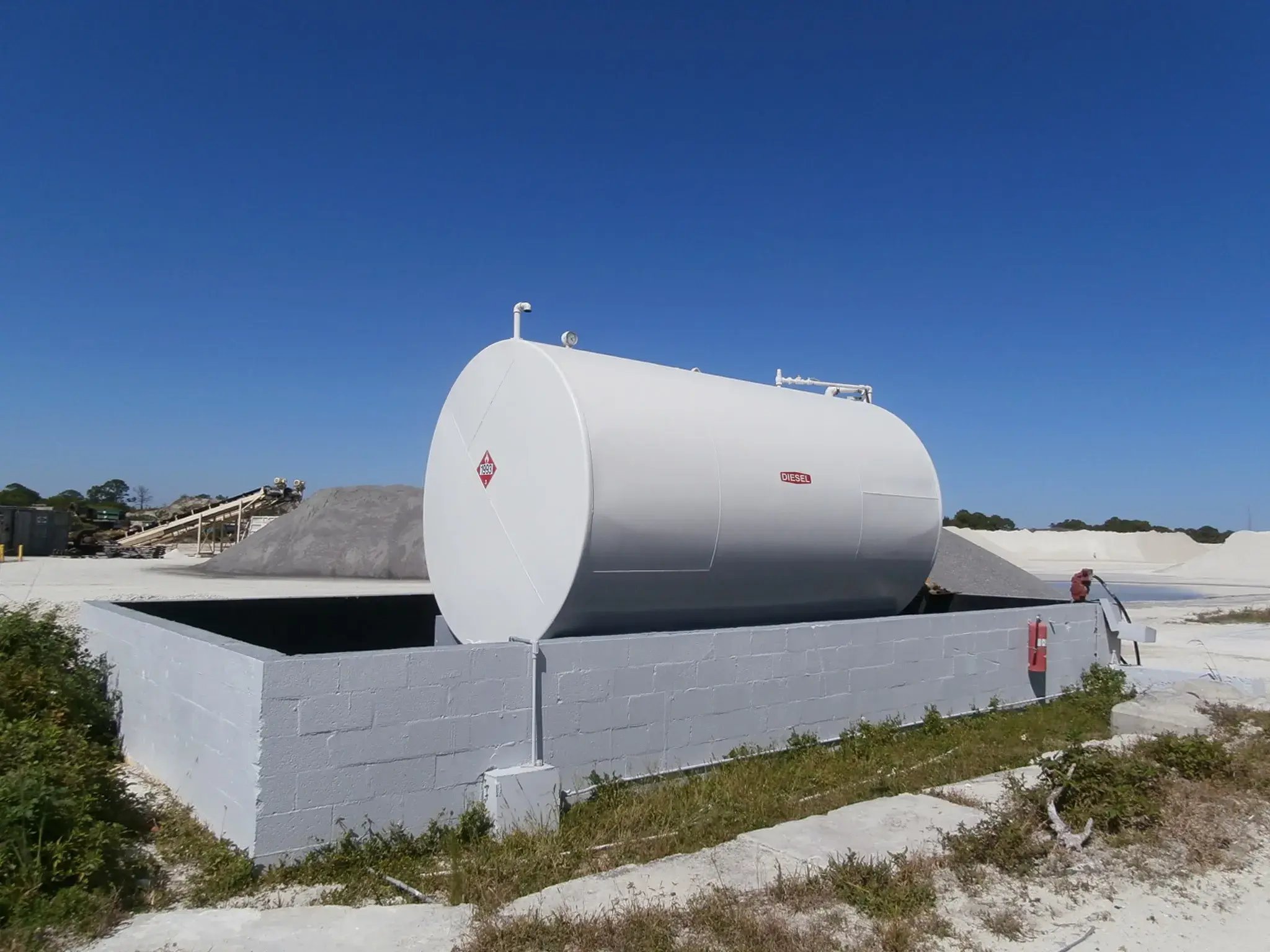
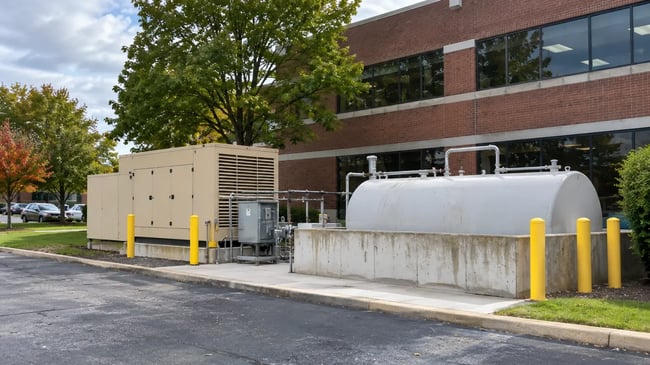
Generator fuel tanks count toward the 1,320-gallon threshold. Many people expect emergency equipment to be exempt, and it isn't. The tank under a generator, a separate day tank, and a larger bulk tank feeding several generators all count by capacity. The exemption for fuel tanks that power motor vehicles or other mobile equipment doesn't reach stationary generators. Fuel trailers and skid tanks don't qualify for it either.
At a hospital with several generators, or a campus with one generator per building, the total can pass 1,320 gallons quickly. A facility that was under the line can also cross it when someone adds a generator during a renovation. If that happens, you'd need an SPCC Plan you didn't have before, or your existing plan would need an update. We cover that situation in what happens to your SPCC status when you add a generator.
Hospitals and large campuses often have a second wrinkle: oil-filled equipment such as transformers and hydraulic systems. Those count too, and the rule gives a special option for some of it, which we explain in the contingency plan option for oil-filled equipment. A hospital kitchen that stores cooking oil is another one that surprises people, and our post on vegetable oil and SPCC explains how it's counted.
Generators raise other questions too. Emergency generators can come with air permit questions, which are a separate program from oil spill rules, and a facility that stores diesel in quantity may also have Tier II reporting to think about. Neither replaces an SPCC Plan, and an SPCC Plan doesn't cover either of them.
What Oil Storage Issues Come Up for Manufacturers and Data Centers?
Manufacturers tend to have the most scattered oil. A single plant might have hydraulic reservoirs on presses, lube oil in totes, cutting oil in sumps, drums of new and used oil in various corners, and a diesel tank for forklifts or a fleet. Each is a small piece, but the inventory has to count every container of 55 gallons or more, and the containment evaluation has to cover each location where oil sits. Drums and totes are the usual weak spot, and we explain what works in secondary containment for drums and totes.
Data centers go the other direction. The oil is concentrated: large generator tanks, day tanks, and transformers, often repeated across multiple buildings or phases. Total capacity can run well past 10,000 gallons, which matters because facilities at or under that line can sometimes use a simpler self-certified plan, and above it they need a more involved one. A facility that keeps growing can cross the line without anyone noticing, which we cover in what happens when a facility crosses 10,000 gallons. For more on the industry, see our data center SPCC guide. Very large facilities can also trigger a separate, heavier requirement called a Facility Response Plan, so a data center campus that keeps adding capacity should have that question answered early.
How Does the Pennsylvania Storage Tank Program Apply in the Collar Counties?
DEP's storage tank program runs under the Storage Tank and Spill Prevention Act and 25 Pa. Code Chapter 245. In plain terms, many aboveground tanks have to be registered with DEP, and DEP has rules about who can install and inspect them. Tanks over 21,000 gallons are treated as large tanks with more demanding requirements, and larger aboveground facilities may also need a Spill Prevention Response Plan (SPRP). Whether a specific tank needs registration depends on its size, type, and use, so check yours against DEP's storage tank program rather than assuming. DEP also keeps registration data in its eFACTS system, which is worth checking against what's on your site.
The state program and the federal one overlap but aren't the same thing. An SPCC Plan doesn't register your tanks, and a DEP registration doesn't give you a spill plan. Some facilities also need a Pennsylvania Preparedness, Prevention and Contingency (PPC) Plan, which has its own purpose. We lay out how they differ in SPCC vs. PPC Plans in Pennsylvania. If a tank needs a DEP-certified inspector, that's covered in our guide to DEP-certified tank inspectors, and the cost side is in our post on tank registration fees.
What Role Do Local Fire Officials Play in Oil Storage?
Fire code requirements for oil tanks are handled locally, and they vary by municipality. In the collar counties that can mean a municipal fire marshal, a code official, or a third-party agency, depending on where the facility sits. They typically care about fire safety: where a tank sits relative to buildings and property lines, how it's vented and labeled, how a generator tank is installed, and whether the site meets the local code for flammable and combustible liquids. They're also often the people who respond first if something goes wrong, so a good working relationship pays off.
Fire officials are not checking your SPCC Plan. Their approval says a tank meets local fire code, and it doesn't mean the tank has adequate spill containment under the federal rule, or that it's registered with DEP. The reverse is true too. Treat the three as separate boxes, and confirm local requirements with your municipality early, especially before you buy a tank or add a generator.
That matters most for new installations. Building and fire permits for installing a tank or generator, and the installation itself, which in Pennsylvania may require DEP-certified installers, are construction-phase approvals. We don't prepare those, and nothing in an SPCC Plan replaces them. Most facilities work with their engineer, contractor, or local officials on that piece. Once the equipment is in and running, that's where we come in: an SPCC Plan or an update to the one you have, DEP tank registration questions, inspections, and training. We can also help you figure out what the construction phase will need and point you toward the right people. Our post on how new oil storage changes your SPCC Plan covers the operational side of an expansion.
What Are the Common Oil Storage Compliance Problems in the Collar Counties?
The same handful of problems come up again and again, no matter which county the site is in.
| Common problem |
Why it happens |
What helps |
| Tanks counted wrong |
Someone counts contents instead of capacity, or skips equipment and small tanks |
A full inventory built from nameplates and a site walk |
| Plan not updated after changes |
A generator, tank, or building gets added and nobody tells whoever owns the plan |
A change process, and a look at what to update when you add equipment |
| Plan is more than five years old |
Plans have to be reviewed at least every five years and the date slips |
A calendar reminder and a read of the five-year review rule |
| Containment that doesn't add up |
The dike was sized for the tank but not for rain, or other equipment sits inside it |
A real calculation, as described in how to evaluate secondary containment |
| Missing inspection records |
Monthly walkthroughs happen but nobody writes them down |
A simple checklist, like the one in our monthly inspection checklist |
| Registration out of date after a sale or name change |
New owner or new company name, and the DEP records still show the old one |
Updating both the plan and the registrations, as in our name and ownership change guide |
| Unclear ownership at multi-tenant sites |
The landlord, a tenant, and a vendor each assume someone else owns the generator and the plan |
Writing down who owns, operates, and inspects each tank |
Office parks and multi-tenant campuses add a twist, because it isn't always obvious who the owner or operator is for a given generator. Sort that out before the plan is written, since the plan has to name who's responsible. And if you're buying or selling a property with tanks on it, how SPCC and tank transfers work in a sale walks through what changes hands.
If oil does get out, safety comes first. Call 911 if anyone is at risk. Spills to water or storm drains have to be reported: federal rules point to the National Response Center at 1-800-424-8802, and DEP runs a 24-hour environmental emergency line at 1-800-541-2050. Whether a particular spill triggers a report depends on the amount and where it went, and our posts on the sheen rule and what to do when a spill reaches a creek cover the details. A significant spill can bring penalties and liability questions, and an environmental attorney may be the right call.
What Does an SPCC Plan Cost for a Collar County Facility, and How Long Does It Take?
Cost depends on how much oil you store, how many containers and locations there are, how complex the containment is, and whether the plan needs a Professional Engineer's certification. A single-site office park with one or two generators is a very different job from a hospital campus or a multi-building data center.
| Facility situation |
Typical range for the SPCC Plan |
What pushes it up |
| Smaller facility that can self-certify (Tier I) |
About $1,500 to $4,000 |
More containers, spread-out sites, missing records |
| Larger or more complex facility, including PE-certified plans |
Up to about $15,000 |
Total capacity, number of buildings or sites, loading areas, PE review |
Across all plan types, our SPCC range runs from about $1,500 to $15,000. When a plan needs a PE, we work with an outside engineer who reviews, stamps, and seals it, and that review is paid work that adds time. DEP tank registration fees and any required inspections are separate costs, and you'll find more on those in our SPCC cost guide. Timing depends on how fast the site visit gets scheduled, how quickly you can gather records, and whether an engineer is involved, as we explain in how long an SPCC Plan takes in Pennsylvania. You can get a number for your own facility with the pricing calculator below.
How Can RMA Help With Oil Storage Compliance in the Philadelphia Suburbs?
We're a family-run firm, and senior staff do the work on every plan. For facilities in these four counties we help with the operational side of oil storage: figuring out whether you need an SPCC Plan, building or rebuilding it, working through the Pennsylvania tank program questions that sit alongside it, and training your people. With a new SPCC Plan from RMA, initial SPCC training is free. If you'd like to see how we work first, take a look at our SPCC Plan process. We also tell people when they don't need us, and if you're under the threshold and have no other oil storage issues, we'll say so.
There's no pressure and no obligation. You can call, email, or contact us through the form on our website, tell us what you're storing and where, and we'll help you work out which rules apply.