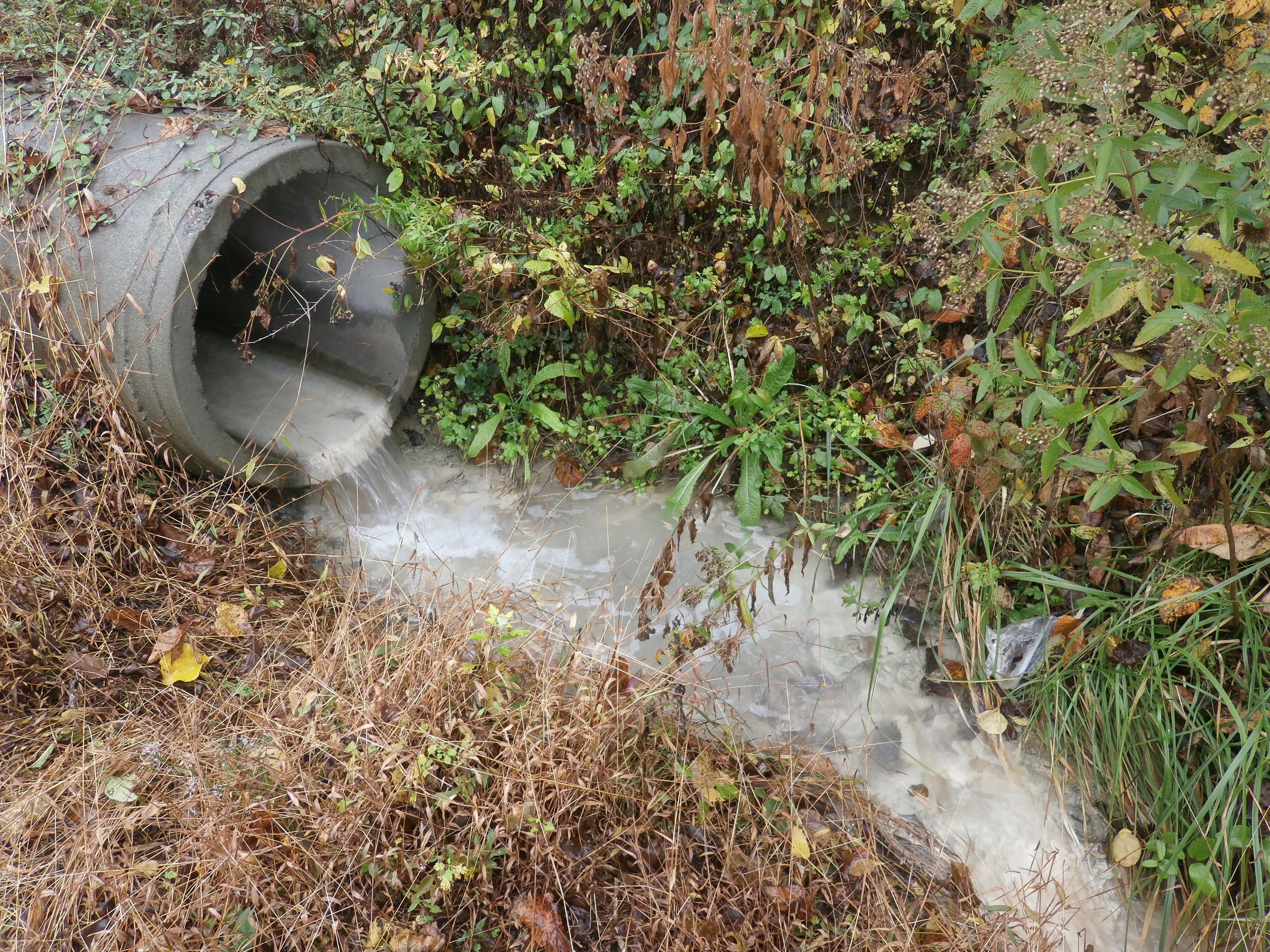
Most Contractor Yards Fall Outside PAG-03, but Fueling, Washing, Stockpiles, and Job Sites Still Carry Stormwater Rules
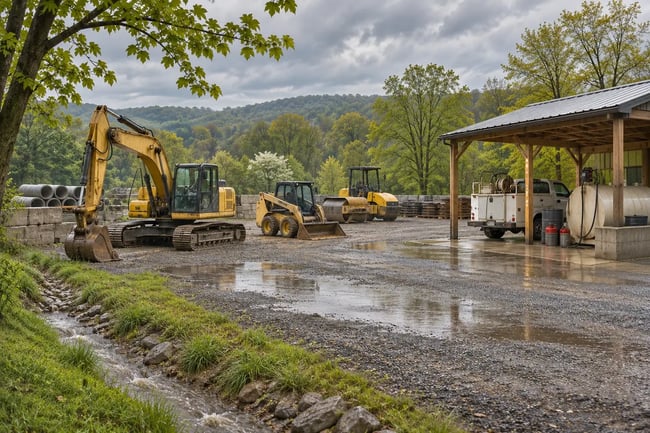
If you run a contracting business in Pennsylvania, you probably have a yard somewhere. It might be a gravel lot behind the shop or a fenced corner of a larger property where the excavators, dump trucks, skid steers, and stone piles sit between jobs. When a neighbor, an insurer, or a landlord brings up stormwater permits, it's fair to wonder whether that yard counts as an industrial facility that needs Pennsylvania DEP coverage. The short answer is that most contractor equipment yards don't need PAG-03, DEP's general permit for industrial stormwater, but that answer comes with a few conditions.
This article explains why construction contractors generally aren't on DEP's industrial stormwater list, what can still land a yard in the permit system, and which spill, washing, and local rules apply either way. We also cover construction stormwater under PAG-02, which is a separate issue that applies to your job sites and to building a new yard. If you'd like a second opinion on your own yard, you can reach out to RMA at any point.
Table of Contents
TL;DR
Most contractor equipment yards in Pennsylvania don't need PAG-03 because construction contractors aren't in the SIC code categories that DEP's industrial stormwater rules cover. That changes if the yard also runs a concrete or asphalt plant, a hauling operation, or a scrap or mulch business, or if DEP finds pollutants leaving the site. Even with no permit, fuel spills, wash water, and stockpile runoff are still regulated by state law and local ordinances, and construction stormwater under PAG-02 applies separately to job sites and to grading a new yard.
Do Contractor Equipment Yards Need PAG-03 Industrial Stormwater Coverage in Pennsylvania?
PAG-03 is Pennsylvania's general permit for stormwater from industrial facilities. It's issued under the federal NPDES program, short for National Pollutant Discharge Elimination System, which is how the Clean Water Act controls discharges to streams and storm sewers. A general permit means a facility files a Notice of Intent with DEP and follows a standard set of conditions instead of negotiating a one-off permit. If you want the full background, we cover it in our plain-English guide to what PAG-03 is and who needs it.
Whether a facility needs PAG-03 depends mostly on what the business does there, not on how much equipment is parked outside. DEP looks at the facility's primary SIC code, the Standard Industrial Classification code that describes its main line of work, or at a narrative description of its industrial activity. Construction contractors such as excavators, paving crews, utility contractors, and the building trades aren't among the covered categories. A typical contractor equipment yard therefore doesn't need PAG-03, and it doesn't need a No Exposure Certification either. That certification is the paperwork covered facilities file to show their industrial activity stays out of the rain.
That's the general answer, and it has edges. A yard that batches its own concrete, operates mainly as a hauling business, or processes scrap or mulch can be classified differently, and DEP keeps the authority to require coverage where stormwater is picking up pollutants. We take those one at a time below.
Why Contractor Equipment Yards Usually Fall Outside Pennsylvania's Industrial Stormwater SIC Code List
The federal rule behind all of this, 40 CFR 122.26(b)(14), defines stormwater associated with industrial activity through eleven categories. Some categories are built on SIC codes, such as most manufacturing. Others are built on activities, such as landfills, hazardous waste facilities, scrap and salvage yards, and mining. SIC major groups 15, 16, and 17, which are the building, heavy construction, and special trade contractors, aren't on that list. Construction work is handled by its own category, which is based on how much land is disturbed rather than on a SIC code. That's the PAG-02 side of things, and we get to it later.
DEP's industrial stormwater FAQ lays out how the primary SIC code works in practice. If a facility's primary SIC code or industrial activity is listed in the federal rule, it has to seek PAG-03 coverage or file a No Exposure Certification. The guidance also says that when only a secondary SIC code is listed, the facility isn't required to apply. For a contractor, that means a side operation like a small repair bay usually doesn't pull the whole yard into PAG-03 when the main business is construction. DEP describes the FAQ as non-binding guidance and reserves the right to deviate from it, so treat it as the way DEP usually reads the rules and not as a guarantee.
The same logic is why many warehouses don't need coverage either, which we explain in our article on warehouses and distribution centers. If you're not sure which SIC code applies to your business, our guides on finding your SIC code and on how DEP's SIC code test works walk through it.
When Could a Contractor Yard in Pennsylvania Be Classified as Industrial for Stormwater?
The most common way a contractor ends up inside the permit system is by running a second business at the same location. A yard with a ready-mix batch plant or an asphalt plant is making products, and the manufacturing rules apply to the plant area. Our articles on ready-mix concrete plants and asphalt plants cover how DEP treats them. The same goes for a yard that sorts and sells scrap metal, which falls into the federal recycling category, and one that grinds and sells mulch, which we cover in our scrap yard and mulch and compost yard articles.
The second case is a company that's really a hauler. Trucking and other transportation businesses sit in SIC codes 40 through 45, and the federal rule treats only the parts of those facilities that have vehicle maintenance shops, equipment cleaning, or deicing as industrial. If your yard's main revenue comes from moving material for other people and not from doing construction, the trucking company article is the better fit.
The third case has no SIC code behind it at all. DEP's guidance says that when a facility's SIC code isn't listed, it can still require coverage under Pennsylvania's Clean Streams Law if it finds pollutants in the stormwater. If DEP does that, No Exposure isn't an option, and the facility has to file for PAG-03 or an individual permit. Federal rules give permitting agencies similar room to designate discharges that contribute to a water quality problem. A visible problem such as a sediment plume, an oily sheen, or a neighbor's complaint is the kind of thing that can start that conversation, and we describe how it plays out in our article on runoff complaints to PA DEP.
To check where your yard stands, start with your primary SIC code, then walk the yard and note anything that looks like a second business, such as batching, crushing, salvage, or a repair operation that serves outside customers. Our guide on how to determine whether your facility needs a PAG-03 permit lays out the steps, and DEP's eFACTS database shows what's already on file for your address, as we explain in our eFACTS walkthrough.
What Rules Still Apply to Equipment Maintenance, Fueling, and Washing in a Contractor Yard?
Not needing a permit doesn't mean the yard is unregulated. Pennsylvania's Clean Streams Law prohibits polluting state waters whether or not a facility holds a stormwater permit, and 25 Pa. Code § 91.34 requires anyone handling pollutants to take measures that keep them out of state waters. DEP can require a written plan describing those measures. We break down the law itself in what the Pennsylvania Clean Streams Law means for businesses. For a contractor yard, the practical risks come down to a handful of activities.
| Yard activity |
What can go wrong |
What usually governs it |
| Fueling from on-site tanks |
Spills and overfills reaching soil, ditches, or storm drains |
Pennsylvania storage tank registration for many aboveground tanks over 250 gallons, federal SPCC rules, and the Clean Streams Law |
| Engine and hydraulic repair outdoors |
Drips, used oil, and parts washing leaving the pad |
Clean Streams Law and 25 Pa. Code § 91.34 |
| Washing trucks and equipment |
Wash water isn't stormwater, so it can't simply run to a storm drain or ditch |
Sewer authority approval, a recycling wash system, or off-site disposal |
| Concrete mixer and pump washout |
High pH water and solids reaching storm drains |
Clean Streams Law and local illicit discharge ordinances |
| Stone, soil, and fill stockpiles |
Sediment washing into drainage and streams |
Chapter 102 erosion and sediment control and local ordinances |
Fuel is where the paperwork tends to creep up. Pennsylvania's storage tank program registers regulated aboveground tanks over 250 gallons, although some tank types are excluded. Separately, the federal SPCC rule applies to a facility when its aboveground oil storage, counting only containers of 55 gallons or more, adds up to more than 1,320 gallons. A fuel tank, a few drums of hydraulic oil, and oil totes can reach that total, so it's worth tallying every container before assuming you're under it. Our articles on SPCC versus PPC plans in Pennsylvania and Pennsylvania's spill prevention response plan explain how those plans differ.
Wash water is the one we see handled badly most often. Rainwater running off a yard is stormwater, but water from a pressure washer or a hose-down is a different thing, and it generally can't go to a storm drain, a ditch, or the ground near a stream. DEP's own guidance for PAG-03 facilities says vehicle wash water isn't authorized under the general permit unless it's fully separated and recycled or sent to a sanitary sewer. The same practical options are available to a contractor yard. We cover them in whether you can wash trucks outside in Pennsylvania. For general housekeeping on piles and parked equipment, see our article on storing materials outside, and for a leak that leaves a film on the puddles, when an oily sheen has to be reported.
How Do Local Stormwater Ordinances and MS4 Rules Affect a Contractor Equipment Yard?
Many Pennsylvania townships and boroughs operate a municipal separate storm sewer system, called an MS4, and their DEP permits require them to prohibit non-stormwater discharges into it. Their ordinances typically spell out what counts as an illicit discharge, and motor vehicle fluids and wash water are standard examples. That means a contractor yard with no state permit can still be on the hook locally if a floor drain, a washout, or a leaking tank ends up in the municipal storm sewer. Our article on how township MS4 programs overlap with industrial permits explains who is responsible for what.
Local rules go beyond illicit discharges. Zoning and stormwater management ordinances can set requirements for grading, paving, and detention when a yard is built or expanded, and some municipalities charge stormwater fees based on impervious surface. A fee is not a permit, and paying one doesn't mean you have DEP coverage or need it, which we sort out in stormwater fees versus stormwater permits. Requirements vary a lot from one municipality to the next, and some older cities have combined sewers where the sewer authority governs site runoff. For those reasons, confirm your situation with your township, borough, or sewer authority before you assume anything, and read our article on discharging to a municipal storm sewer if your yard drains to one.
Where Does Construction Stormwater (PAG-02) Fit for Contractor Job Sites and New Yards?
Construction stormwater is its own program, and it's the one contractors run into most. Pennsylvania regulates earth disturbance under 25 Pa. Code Chapter 102. Erosion and sediment control practices are required for any earth disturbance, a written erosion and sediment control plan is required for disturbances of 5,000 square feet or more, and an NPDES permit is required once a project disturbs one or more acres. Many of those projects use PAG-02, DEP's general permit for construction stormwater. The current version took effect December 8, 2024, and runs through December 7, 2029. Our article on the difference between PAG-02 and PAG-03 compares the two.
That program applies to your job sites, and it can apply to your own yard in two situations. Building or expanding the yard can cross the one-acre line, and DEP's definition of earth disturbance includes stockpiling or storing soil, rock, and other earth materials, so large fill piles can raise Chapter 102 questions too. Who holds the permit on a customer's project, and what a contractor has to sign or follow, varies by project, so check the plans and your contract with the project engineer.
We want to be plain about the limits of what we do. RMA doesn't prepare construction-phase permits or approvals, including PAG-02 coverage, Chapter 102 erosion and sediment control plans, or conservation district approvals. For those, you'll work with your engineer, your contractor, or an erosion and sediment control specialist. What we can do is help you work out what the construction phase is likely to need and point you toward the right people for it. Once the yard is built and running, the operational side is where we help: whether any permit or certification applies, spill plans, and the day-to-day handling of fuel, wash water, and runoff.
How Does RMA Help Pennsylvania Contractors With Equipment Yard Stormwater Questions?
For most contractors, the most useful thing we can do is look at the yard, check your SIC code and activities against DEP's rules, and tell you plainly what applies. Often the answer is that you don't need a stormwater permit, and we'll say so. If something does apply, whether that's PAG-03 coverage, a No Exposure Certification, an SPCC plan, or a PPC plan (the Preparedness, Prevention and Contingency plan DEP uses to describe how a site prevents pollution), we help you sort out the right path and put it together. We work with Pennsylvania facilities all the time, and senior staff handle the work directly.
You can browse more of our guides in the NPDES and stormwater resources library, on our Pennsylvania NPDES and stormwater services page, or in our full set of Pennsylvania NPDES articles. If you'd rather talk it through, you can call, email, or fill out the form on our website, and there's no obligation. Just contact RMA whenever you're ready.